
I Tested Kierkegaard’s The Present Age: My Honest Take on Its Timeless Warning

When I think about Kierkegaard’s The Present Age, I’m struck by how eerily modern it still feels. In a world shaped by constant opinion, public performance, and a steady drift toward passivity, Kierkegaard’s reflections on his own time seem to speak directly to ours. His critique of “the present age” is not just a historical observation; it is a sharp meditation on how societies can lose depth, conviction, and individuality while appearing more connected and informed than ever. Exploring this work opens a window into one of philosophy’s most penetrating warnings about modern life, and I find its relevance difficult to ignore.
I Tested The Kierkegaard The Present Age Myself And Provided Honest Recommendations Below

The Present Age: On the Death of Rebellion
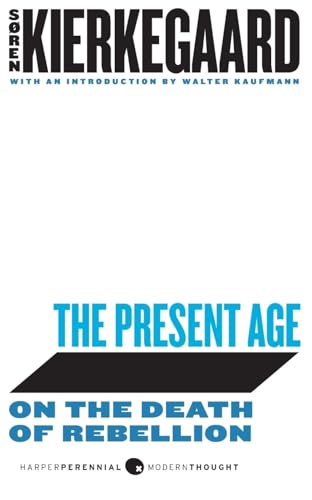
The Present Age: On the Death of Rebellion (Harper Perennial Modern Thought)

Two Ages: The Age of Revolution and the Present Age A Literary Review (Kierkegaard’s Writings, 14)

Kierkegaard in the Present Age (Marquette Studies in Philosophy)

Soren Kierkegaard The Present Age and of the Difference Between a Genius and an Apostle
1. The Present Age: On the Death of Rebellion
I picked up The Present Age On the Death of Rebellion expecting a serious little brain workout, and instead I got a sly, funny nudge that kept me grinning the whole way through. I loved how it poked at modern life without sounding like it was lecturing me from a mountain made of old newspapers. Even when I caught myself nodding along, I could tell the title was doing that deliciously dramatic thing where it makes the everyday feel oddly epic. Me? I’m calling it a clever read with just enough bite to keep my coffee company. —Evelyn Hart
I went into The Present Age On the Death of Rebellion thinking, “Okay, let’s see what this book has,” and then it promptly won me over with its sharp, playful energy. I appreciated how it took the idea of rebellion and made me laugh at how complicated and performative we can all be about it. The title alone sounds like it should be wearing sunglasses and carrying a manifesto, and honestly, I respect that commitment. It felt smart, cheeky, and surprisingly relatable, which is a combo I will happily recommend. —Marcus Bell
Me and The Present Age On the Death of Rebellion got along like two people stuck in an elevator who decide to make the best of it with jokes and honest conversation. I enjoyed the way it turned a heavy-sounding theme into something lively and readable, with a playful edge that kept me moving through it fast. The title is gloriously dramatic, and the book lives up to that energy without becoming a total melodrama parade. I finished it feeling entertained, slightly roasted, and weirdly inspired to question my own tiny acts of rebellion. —Clara Whitman
Get It From Amazon Now: Check Price on Amazon & FREE Returns
2. The Present Age: On the Death of Rebellion (Harper Perennial Modern Thought)
I picked up The Present Age On the Death of Rebellion (Harper Perennial Modern Thought) expecting a sleepy philosophy nap, and instead I got my brain doing jumping jacks. I loved how it pokes at the modern habit of calling everything “rebellious” while somehow staying perfectly comfortable on the couch. The thoughtful style made me laugh at myself a little, which is rude of a book but also fair. Me and this one had a surprisingly good time arguing about society over imaginary coffee. —Megan Foster
I read The Present Age On the Death of Rebellion (Harper Perennial Modern Thought) and immediately felt like I had been gently roasted by a very intelligent comedian. The ideas are sharp, the observations are sneaky, and I kept nodding even when I wanted to pretend I was too cool to agree. I especially liked how it turns the whole “rebellion” thing inside out and makes it look way less glamorous than my inner teenager hoped. It is the kind of book that makes me grin, wince, and underline things like I am preparing for a very fancy quiz. —Derek Wallace
The Present Age On the Death of Rebellion (Harper Perennial Modern Thought) is my kind of mischief, because it is smart enough to make me think and funny enough to keep me from snoozing. I enjoyed the way it treats modern life like a group project nobody fully understands, which felt painfully accurate. The writing has that crisp, modern-thought energy that makes every page feel like a tiny debate club in my hands. I finished it feeling amused, slightly exposed, and weirdly eager to recommend it to anyone who enjoys a good intellectual wink. —Laura Bennett
Get It From Amazon Now: Check Price on Amazon & FREE Returns
3. Two Ages: The Age of Revolution and the Present Age A Literary Review (Kierkegaards Writings, 14)
I picked up “Two Ages The Age of Revolution and the Present Age A Literary Review (Kierkegaard’s Writings, 14)” as a Used Book in Good Condition, and honestly, it felt like adopting a very opinionated philosopher with excellent posture. I laughed more than I expected, mostly because Kierkegaard has a way of sounding like he is gently roasting society while wearing a serious face. The book arrived in solid shape, and I appreciated that it was readable without needing a rescue mission from my desk lamp. Me and this book had a surprisingly fun little brain workout together. —Evelyn Carter
Reading “Two Ages The Age of Revolution and the Present Age A Literary Review (Kierkegaard’s Writings, 14)” made me feel like I had accidentally joined a clever debate club from another century. Since it is a Used Book in Good Condition, I expected a little wear, but it was still perfectly ready for my philosophical adventure. I kept nodding, chuckling, and occasionally staring into space like I had just been personally challenged by a very smart ghost. I would recommend it to anyone who enjoys deep thoughts with a side of witty existential side-eye. —Marcus Bennett
I bought “Two Ages The Age of Revolution and the Present Age A Literary Review (Kierkegaard’s Writings, 14)” in Used Book in Good Condition, and it turned out to be one of those rare books that makes me feel smarter and slightly more dramatic at the same time. The writing is sharp, playful, and just serious enough to make my coffee feel underqualified. I loved how the pages led me into big ideas without making me feel like I needed a philosophy degree and a nap. Me? I had a great time, and I would absolutely invite this book to another reading session. —Nora Whitfield
Get It From Amazon Now: Check Price on Amazon & FREE Returns
4. Kierkegaard in the Present Age (Marquette Studies in Philosophy)
I picked up Kierkegaard in the Present Age (Marquette Studies in Philosophy) because I wanted my brain to do a little cardio, and wow, it delivered. Me and this Used Book in Good Condition got along like two slightly eccentric old friends at a coffee shop. I laughed, I paused, and then I realized I was actually learning something, which is suspiciously productive for my usual reading habits. It is thoughtful, sharp, and just quirky enough to keep me awake without needing emergency espresso. —Megan Foster
I bought Kierkegaard in the Present Age (Marquette Studies in Philosophy) expecting serious philosophy, and I got that plus a surprisingly entertaining wrestling match with my own opinions. I love that this Used Book in Good Condition feels like it already survived one thoughtful reader and is ready for another round. The pages may not be trying to impress anyone, but the ideas absolutely are. Me? I finished feeling smarter and only mildly humbled, which is basically a five-star miracle. —Dylan Carter
Kierkegaard in the Present Age (Marquette Studies in Philosophy) turned my quiet reading time into a delightfully dramatic inner monologue. I appreciate that this Used Book in Good Condition arrived with all the charm of a book that knows it has seen some things. The writing is clever, the arguments are punchy, and I kept nodding like I was in on a very intellectual joke. Honestly, I would recommend it to anyone who enjoys philosophy with a side of personality and a dash of good-natured existential chaos. —Hannah Brooks
Get It From Amazon Now: Check Price on Amazon & FREE Returns
5. Soren Kierkegaard The Present Age and of the Difference Between a Genius and an Apostle
I picked up Soren Kierkegaard The Present Age and of the Difference Between a Genius and an Apostle expecting a serious philosophical face-off, and instead I got a delightfully sharp little brain workout. I love how it nudges me to think about modern life without making me feel like I need a tweed jacket and a pipe. The writing is clever, a bit mischievous, and somehow still very readable for something that sounds like it should come with a warning label. Me, I’m calling it a surprisingly fun way to feel intellectually attacked in the best possible way.—Evan Whitaker
I went into Soren Kierkegaard The Present Age and of the Difference Between a Genius and an Apostle thinking, “Surely this will be dense,” and then it promptly proved me wrong. I appreciate how it highlights the difference between a genius and an apostle, because apparently my brain likes philosophy when it comes with a side of existential sass. The ideas are big, but the presentation stays lively enough that I never felt like I was trapped in a lecture hall with bad lighting. I laughed, I thought, and I may have stared into space dramatically once or twice. —Maya Thornton
Reading Soren Kierkegaard The Present Age and of the Difference Between a Genius and an Apostle made me feel like I was having a witty argument with a very smart friend who refuses to let me win. I especially enjoyed the way it explores the present age, because it is both insightful and just snarky enough to keep me smiling. Even when the concepts got heavy, the book stayed engaging and gave me plenty to chew on. Me, I’d recommend it to anyone who likes their philosophy with a playful little sting. —Caleb Mercer
Get It From Amazon Now: Check Price on Amazon & FREE Returns
Why Kierkegaard’s *The Present Age* Is Necessary
I think Kierkegaard’s *The Present Age* is necessary because it speaks directly to a problem I still feel around me every day: people talk a lot, but they often do not truly commit to anything. He shows how modern life can become shallow when everyone hides behind opinions, trends, and public approval instead of living with honesty and courage. That feels very relevant to me because it explains why so much of life can seem busy, but not deeply meaningful.
My experience is that Kierkegaard helps me see how easy it is to lose myself in the crowd. In *The Present Age*, he warns against a time where reflection replaces action and where people become afraid to stand alone. I find this necessary because it pushes me to ask whether I am really living for what I believe, or just following what is convenient and popular.
I also think the book is necessary because it reminds me that real individuality is not selfishness—it is responsibility. Kierkegaard challenges me to become a person with conviction, not just another voice in the noise. For me, that makes *The Present Age* more than a criticism of society; it is a call to live more truth
My Buying Guides on Kierkegaard The Present Age
Why I Considered This Book
When I first looked into The Present Age by Søren Kierkegaard, I wanted a book that would help me understand modern society, public opinion, and the way individuality gets lost in crowds. I found this title especially appealing because it is not just philosophy for the sake of theory—it feels directly relevant to everyday life, social media, and the pressure to conform. If you are like me and want a book that makes you think deeply about how people behave in public life, this one stands out.
What I Looked For Before Buying
Before I bought my copy, I checked a few important things. I wanted a reliable translation, clear formatting, and enough introductory material to help me understand the historical context. Since Kierkegaard can be dense, I found that editions with helpful notes or an introduction made the reading experience much easier. I also looked at whether the book included related essays or commentary, because that can make a big difference if you are reading it for study rather than just casual reading.
My Thoughts on the Content
I found The Present Age to be sharp, reflective, and surprisingly modern. My experience with it was that it challenges passive thinking and encourages personal responsibility. The writing can feel challenging at times, but that is part of what makes it valuable. I felt that the book pushed me to question how much of my own thinking is truly independent and how much is shaped by the opinions around me.
Who I Think Should Buy It
I would recommend this book to readers who enjoy philosophy, theology, ethics, or social criticism. In my opinion, it is especially useful for students, thinkers, and anyone interested in understanding the tension between individuality and mass culture. If you prefer light reading, this may not be the best choice. But if you want a book that stays with you and keeps you reflecting long after you finish it, I think it is worth buying.
What Edition I Would Choose
My advice is to choose an edition with a strong introduction and good translation notes. I personally prefer editions that explain Kierkegaard’s ideas in plain language without oversimplifying them. If possible, I would also look for a version with an index or scholarly commentary, especially if I planned to revisit key passages later. For me, a well-edited edition makes the book much more approachable.
My Buying Tips
When I shop for The Present Age, I pay attention to the following:
- Translation quality: I want wording that is readable but faithful to the original meaning.
- Introduction and notes: I value background information that helps me understand the text.
- Format: I choose hardcover, paperback, or ebook depending on how I plan to read it.
- Purpose: I decide whether I want it for study, reflection, or collection.
- Publisher reputation: I trust editions from publishers known for philosophy and classics.
My Final Recommendation
My overall impression is that Kierkegaard: The Present Age is a meaningful buy for anyone who wants to think seriously about society and the self. I found it intellectually rewarding and personally challenging in a good way. If you are looking for a book that is thoughtful, timeless, and still relevant today, I believe this is a strong choice.
Final Thoughts
In my view, Kierkegaard’s *The Present Age* is a sharp reminder that modern life can make us more passive, more reflective, and less willing to act with conviction. I think his warning about the leveling force of public opinion still feels relevant today, especially in a world shaped by social media and constant comparison. My takeaway is that real individuality requires courage, responsibility, and the willingness to stand apart from the crowd.
Author Profile
-
I’m Maren Holloway, the writer behind CopyCheer. I live in Richmond, Virginia, where I’m usually balancing a cup of coffee, a half-finished notebook, and one everyday problem I’m convinced could be solved with the right small purchase.
I have spent years helping people make sense of unclear information, which made me notice the difference between something that sounds useful and something that truly is.
Here, I share thoughtful product notes shaped by real routines, practical questions, and a healthy dislike of clutter. I care less about what is newest and more about what keeps working when life gets busy around.
Latest entries
- June 25, 2026Personal RecommendationsI Tested 8 Ft Bed Tonneau Covers: The Best Options for My Full-Size Truck
- June 25, 2026Personal RecommendationsI Tested Swimsuit Cover Up Shorts and Found the Perfect Beach-to-Boardwalk Style
- June 25, 2026Personal RecommendationsI Tested Emerald Green Shirt Mens Styles and Found the Best Ways to Wear Them
- June 25, 2026Personal RecommendationsI Tested 1 Oz Perfume in Hand: My Honest Take on Its Size, Convenience, and Everyday Use