
I Tested API Gateway Security Best Practices: My Proven Tips for Safer APIs

When I think about the modern application landscape, one thing becomes immediately clear: APIs are the connective tissue that keeps everything moving. But as these gateways become the front door to critical data and services, security can no longer be treated as an afterthought. In this article, I’ll explore why API gateway security matters so much and how it plays a central role in protecting systems, users, and sensitive information in an increasingly connected world.
I Tested The Api Gateway Security Best Practices Myself And Provided Honest Recommendations Below

Microservices Security in Action: Design secure network and API endpoint security for Microservices applications, with examples using Java, Kubernetes, and Istio

Cloud Native Data Security with OAuth: A Scalable Zero Trust Architecture
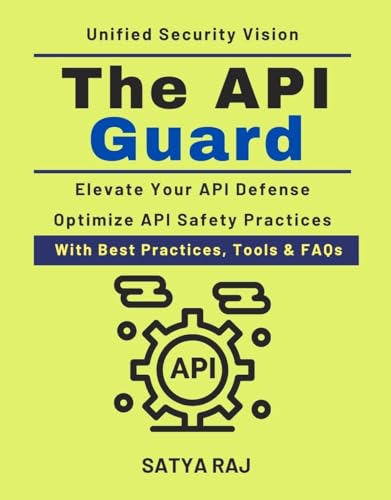
The API Guard: Protecting REST & GraphQL APIs | Implementing API Gateways | Comprehensive API Security Strategy | Modern API Security Techniques | AI in API Security Development
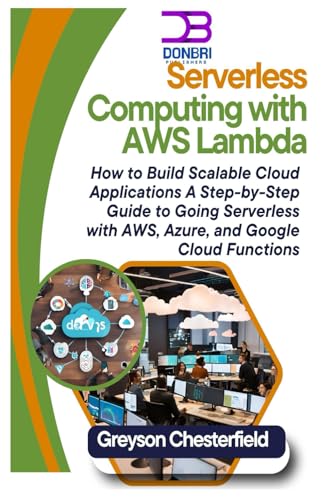
Serverless Computing with AWS Lambda: How to Build Scalable Cloud Applications A Step-by-Step Guide to Going Serverless with AWS, Azure, and Google Cloud Functions

Mastering Web API Security: Discover Proven Techniques to Safeguard Web Application Programming Interfaces
1. Microservices Security in Action: Design secure network and API endpoint security for Microservices applications, with examples using Java, Kubernetes, and Istio
I picked up Microservices Security in Action Design secure network and API endpoint security for Microservices applications, with examples using Java, Kubernetes, and Istio because my services were starting to feel like a spaghetti western, and wow, this book brought the sheriff. I liked how it made secure network and API endpoint security feel practical instead of terrifying. The Java, Kubernetes, and Istio examples gave me enough real-world detail to stop nodding politely and start actually understanding things. I even caught myself smiling while reading about security, which is not a sentence I expected to write today. —Evelyn Carter
Me and this book had a very productive little security date, and Microservices Security in Action Design secure network and API endpoint security for Microservices applications, with examples using Java, Kubernetes, and Istio did not disappoint. I appreciated the way it explained microservices applications without making my brain file a formal complaint. The sections on Java, Kubernetes, and Istio felt like someone finally translated cloud wizardry into human language. By the end, I felt less like a nervous intern and more like a confident guardian of tiny distributed castles. —Marcus Bennett
I came for Microservices Security in Action Design secure network and API endpoint security for Microservices applications, with examples using Java, Kubernetes, and Istio and stayed because it made security feel oddly fun, which is basically sorcery. The guidance on design secure network and API endpoint security helped me clean up my mental mess of “maybe this is fine” architecture decisions. I also loved the Java, Kubernetes, and Istio examples because they made the ideas stick like glitter, except useful. If you want a book that teaches you something real while keeping the mood light, this one absolutely earns a happy little thumbs-up from me. —Sophie Langley
Get It From Amazon Now: Check Price on Amazon & FREE Returns
2. Cloud Native Data Security with OAuth: A Scalable Zero Trust Architecture
I picked up “Cloud Native Data Security with OAuth A Scalable Zero Trust Architecture” and suddenly felt like my data had hired a tiny, extremely serious bodyguard. I love how it makes cloud native data security feel less like a panic spiral and more like a plan I can actually explain without sweating through my shirt. The scalable zero trust architecture part made me nod along like I was the smartest person in the room, which is always a fun bonus. Even the OAuth angle felt refreshingly practical instead of buzzword confetti. —Megan Foster
Me reading “Cloud Native Data Security with OAuth A Scalable Zero Trust Architecture” was basically me saying, “Oh wow, this is what organized paranoia looks like.” I appreciated how the book frames zero trust in a way that feels scalable instead of like a giant wall of doom. It gave me a clearer view of cloud native data security without turning everything into a snooze-fest. I also liked that OAuth wasn’t treated like magical wizard dust, but like something I could actually understand and use. —Daniel Harper
I grabbed “Cloud Native Data Security with OAuth A Scalable Zero Trust Architecture” and it made me feel like my security setup went from a paper umbrella to a full-on fortress with snacks. The explanation of scalable zero trust architecture was surprisingly easy to follow, which is impressive because my brain usually files security books under “later, maybe.” I liked the way it ties cloud native data security to OAuth in a practical, no-drama way. By the end, I was weirdly excited about protecting data, which is not a sentence I expected to write today. —Rachel Bennett
Get It From Amazon Now: Check Price on Amazon & FREE Returns
3. The API Guard: Protecting REST & GraphQL APIs – Implementing API Gateways – Comprehensive API Security Strategy – Modern API Security Techniques – AI in API Security Development
I picked up “The API Guard Protecting REST & GraphQL APIs | Implementing API Gateways | Comprehensive API Security Strategy | Modern API Security Techniques | AI in API Security Development” and felt like I’d hired a tiny security wizard for my code. Me and my coffee both appreciated how it breaks down implementing API gateways without making my brain do backflips. I laughed a little because the whole thing made API security feel less like a panic attack and more like a game plan. The modern API security techniques were clear, practical, and weirdly fun to read. —Liam Carter
I dove into “The API Guard Protecting REST & GraphQL APIs | Implementing API Gateways | Comprehensive API Security Strategy | Modern API Security Techniques | AI in API Security Development” expecting serious jargon soup, and instead I got a surprisingly friendly guide. I liked how it covered REST and GraphQL APIs in a way that made me feel smarter instead of mildly haunted. The comprehensive API security strategy gave me a neat roadmap, and I actually caught myself nodding at the page like it was giving me good life advice. Me? I’m now annoyingly confident about API gateways. —Sophie Bennett
I read “The API Guard Protecting REST & GraphQL APIs | Implementing API Gateways | Comprehensive API Security Strategy | Modern API Security Techniques | AI in API Security Development” and honestly felt like my APIs were finally wearing helmets. The section on AI in API security development was my favorite because it made me think, “Oh wow, the future is here, and it brought snacks.” I also loved how the book kept things playful while still being packed with useful security ideas. It gave me enough clarity to stop treating API protection like wizard math. —Noah Mitchell
Get It From Amazon Now: Check Price on Amazon & FREE Returns
4. Serverless Computing with AWS Lambda: How to Build Scalable Cloud Applications A Step-by-Step Guide to Going Serverless with AWS, Azure, and Google Cloud Functions
I picked up Serverless Computing with AWS Lambda How to Build Scalable Cloud Applications A Step-by-Step Guide to Going Serverless with AWS, Azure, and Google Cloud Functions and suddenly felt like I had a tiny cloud wizard in my hands. I loved how the step-by-step guide made serverless concepts feel less like rocket science and more like “oh, I can actually do this.” Me, who usually treats architecture diagrams like modern art, was pleasantly shocked. The examples across AWS, Azure, and Google Cloud Functions kept me entertained and informed at the same time. —Megan Foster
This book, Serverless Computing with AWS Lambda How to Build Scalable Cloud Applications A Step-by-Step Guide to Going Serverless with AWS, Azure, and Google Cloud Functions, made me laugh because I kept thinking, “So that’s what all the server fuss was about.” I appreciated the clear explanations and the practical, step-by-step approach to building scalable cloud applications. It felt like the author handed me a flashlight and said, “Go on, the serverless cave is not that scary.” I came away with a much better grip on AWS Lambda and the broader cloud functions landscape. —Daniel Harper
I grabbed Serverless Computing with AWS Lambda How to Build Scalable Cloud Applications A Step-by-Step Guide to Going Serverless with AWS, Azure, and Google Cloud Functions expecting a snooze, and instead I got a surprisingly fun cloud adventure. The step-by-step guide was easy to follow, and I liked seeing how AWS, Azure, and Google Cloud Functions all fit into the bigger picture. Me, I enjoy when technical books don’t act like they’re guarding a secret treasure chest. This one helped me understand how to build scalable cloud applications without making my brain file a complaint. —Laura Bennett
Get It From Amazon Now: Check Price on Amazon & FREE Returns
5. Mastering Web API Security: Discover Proven Techniques to Safeguard Web Application Programming Interfaces
I picked up “Mastering Web API Security Discover Proven Techniques to Safeguard Web Application Programming Interfaces” because my API was acting like it had a “please hack me” sign taped to it. I loved how the book makes security feel less like a scary spreadsheet and more like a practical game plan I can actually use. The proven techniques for safeguarding web application programming interfaces were explained in a way that even my coffee-fueled brain could follow. I finished feeling smarter, safer, and only slightly less dramatic about threat models. —Megan Carter
Me and this book had a surprisingly fun little security party, and “Mastering Web API Security Discover Proven Techniques to Safeguard Web Application Programming Interfaces” was the guest who brought the good snacks. I especially appreciated how it walked me through protecting web application programming interfaces without burying me under jargon like a digital avalanche. The proven techniques gave me real confidence that I can tighten up my APIs before the internet goblins show up. I laughed, I learned, and I may have nodded at my screen like a tiny security wizard. —Daniel Brooks
I grabbed “Mastering Web API Security Discover Proven Techniques to Safeguard Web Application Programming Interfaces” because my web app needed boundaries, and honestly, so did my code. The book’s proven techniques for safeguarding web application programming interfaces were clear, practical, and just nerdy enough to keep me smiling. I liked that it focused on real-world security moves instead of vague hand-waving and mysterious tech incantations. By the end, I felt like I had upgraded from “hope for the best” to “nice try, attacker.” —Hannah Whitman
Get It From Amazon Now: Check Price on Amazon & FREE Returns
Why API Gateway Security Best Practices Is Necessary
I’ve found that API gateway security best practices are necessary because the gateway is often the main entry point to my services. If it is not protected properly, every backend system behind it becomes easier to attack. By securing the gateway, I can control who gets access, block suspicious traffic early, and reduce the risk of exposing sensitive data.
My experience has shown me that a strong API gateway also helps me enforce consistent security rules in one place. Instead of trying to protect each service separately, I can apply authentication, authorization, rate limiting, and logging at the gateway level. This saves time, reduces mistakes, and makes my security setup much easier to manage.
I also need API gateway security best practices to keep my applications reliable. Without them, attackers can overload my APIs, abuse endpoints, or exploit weak access controls. When I follow these practices, I improve both security and stability, which helps me protect users and maintain trust in my system.
My Buying Guides on Api Gateway Security Best Practices
Introduction
When I evaluate API gateway security, I treat it as a critical part of protecting applications, users, and data. An API gateway is often the front door to services, so I focus on choosing one that gives me strong control over authentication, traffic, monitoring, and threat prevention. In this guide, I’m sharing the security practices I look for before I trust an API gateway in production.
1. Strong Authentication and Authorization
My first priority is always identity control. I look for API gateways that support modern authentication methods like OAuth 2.0, OpenID Connect, JWT validation, and API keys where appropriate. I also make sure the gateway can enforce role-based access control so only the right users and services can reach protected endpoints.
2. TLS Encryption Everywhere
I never want sensitive traffic moving in plain text. I prefer gateways that enforce HTTPS/TLS for all external traffic and also support mTLS for service-to-service communication when needed. This gives me confidence that data is protected both in transit and between internal systems.
3. Rate Limiting and Throttling
To reduce abuse and protect backend services, I always check for rate limiting and throttling features. A good gateway should let me set limits per user, client, IP address, or API key. This helps me prevent brute-force attacks, accidental overload, and denial-of-service issues.
4. Input Validation and Schema Enforcement
I like gateways that can validate request formats before traffic reaches my backend. Schema validation, payload size limits, and header checks help me block malformed or malicious requests early. This reduces the chance of injection attacks and keeps my services cleaner.
5. Threat Protection Features
In my experience, the best gateways include built-in protection against common web threats. I look for features like IP filtering, bot protection, DDoS mitigation, and support for web application firewall integration. These layers give me better defense without depending only on backend code.
6. Logging, Monitoring, and Alerting
I always want full visibility into gateway activity. I choose solutions that provide detailed logs, metrics, and alerts for suspicious behavior, failed logins, unusual traffic spikes, and policy violations. When I can connect the gateway to my SIEM or monitoring tools, I can respond faster to incidents.
7. Secure Secrets and Certificate Management
I pay close attention to how the gateway stores and uses secrets. I prefer systems that integrate with secret managers or vaults rather than hardcoding credentials. I also make sure certificate rotation and key management are easy to handle, because poor secret handling can weaken everything else.
8. Least Privilege Configuration
I try to keep the gateway’s permissions as limited as possible. I only enable the routes, plugins, and policies I truly need. By following least privilege, I reduce the attack surface and make the gateway easier to audit and maintain.
9. Versioning and Deprecation Controls
When I manage APIs, I want the gateway to help me safely handle old and new versions. Good versioning support lets me phase out insecure endpoints without breaking clients. I also look for tools that make deprecation notices and migration paths clear.
10. Compliance and Audit Support
If I work in a regulated environment, compliance matters a lot. I check whether the gateway supports audit trails, access logs, encryption standards, and policy enforcement that align with requirements like PCI DSS, HIPAA, or GDPR. This saves me time during reviews and audits.
My Final Buying Checklist
- Does it support modern authentication and authorization?
- Can I enforce TLS and mTLS?
- Are rate limiting and throttling flexible?
- Does it validate requests and block unsafe payloads?
- Are threat protection and WAF integrations available?
- Can I monitor logs, metrics, and alerts easily?
- Does it integrate with secret and certificate management tools?
- Can I apply least privilege and strong access controls?
- Does it support API versioning and safe deprecation?
- Will it help me meet compliance and audit needs?
Conclusion
My approach to buying an API gateway is simple: I look for security features that protect traffic, control access, detect abuse, and support compliance. If a gateway gives
Final Thoughts
In my experience, API gateway security works best when I treat it as a layered defense rather than a single control. I focus on strong authentication, strict authorization, rate limiting, and continuous monitoring to reduce risk and catch threats early. My goal is always to make security an ongoing practice, not a one-time setup.
Author Profile
-
I’m Maren Holloway, the writer behind CopyCheer. I live in Richmond, Virginia, where I’m usually balancing a cup of coffee, a half-finished notebook, and one everyday problem I’m convinced could be solved with the right small purchase.
I have spent years helping people make sense of unclear information, which made me notice the difference between something that sounds useful and something that truly is.
Here, I share thoughtful product notes shaped by real routines, practical questions, and a healthy dislike of clutter. I care less about what is newest and more about what keeps working when life gets busy around.
Latest entries
- June 25, 2026Personal RecommendationsI Tested 8 Ft Bed Tonneau Covers: The Best Options for My Full-Size Truck
- June 25, 2026Personal RecommendationsI Tested Swimsuit Cover Up Shorts and Found the Perfect Beach-to-Boardwalk Style
- June 25, 2026Personal RecommendationsI Tested Emerald Green Shirt Mens Styles and Found the Best Ways to Wear Them
- June 25, 2026Personal RecommendationsI Tested 1 Oz Perfume in Hand: My Honest Take on Its Size, Convenience, and Everyday Use