
I Tested TPU Filament for 3D Printing: The Ultimate Flexible Filament Guide

I’ve always found TPU filament for 3D printing to be one of the most exciting materials to work with because it brings a level of flexibility and durability that opens up so many creative possibilities. Whether I’m thinking about functional prototypes, wearable parts, protective cases, or custom components that need to bend without breaking, TPU stands out as a versatile choice in the world of additive manufacturing. Its unique blend of rubber-like elasticity and 3D printing compatibility makes it a material worth exploring for anyone looking to move beyond rigid prints and into something more dynamic and practical.
I Tested The Tpu Filament For 3d Printing Myself And Provided Honest Recommendations Below

JAYO TPU 3D Printer Filament Bundle, 95A Flexible Soft TPU Filament 1.75mm, 250g Spool, 4 Rolls, 1kg in Total, Green+Orange+Red+Blue

SUNLU TPU 3D Printer Filament 1.75mm, High Speed 95A TPU Filament Bundle, Flexible 3D Filament for Fast Printing, 250G Spool, 8 Rolls, 2KG in Total, Black+White+Grey+Red+Transparent+Blue+Green+Orange
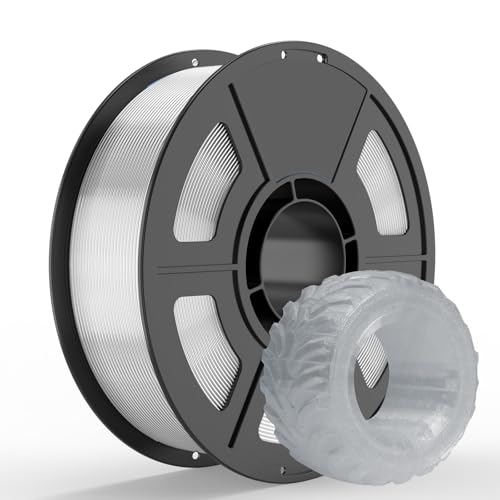
IEMAI TPU 95A 3D Printer Filament 1.75mm, Flexible & Soft Polyurethane, +/- 0.02mm Dimensional Accuracy, 1KG Spool (2.2lbs), Compatible with Most FDM Printers, Transparent

OVERTURE TPU Filament 1.75mm Flexible Roll, 95A Soft 3D Printer Filament, 1kg Spool (2.2 lbs), Fit Most FDM Printer (TPU Black)
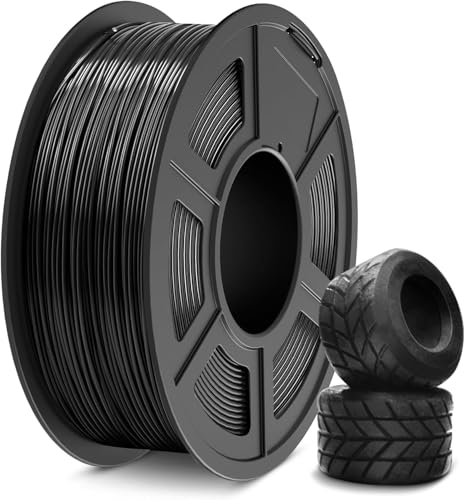
SUNLU TPU 3D Printer Filament 1.75mm, High Speed 95A TPU Filament, 1KG Flexible 3D Filament for Fast Printing, Dimensional Accuracy +/- 0.03mm, Suitable for Most FDM 3D Printers. (Black)
1. JAYO TPU 3D Printer Filament Bundle, 95A Flexible Soft TPU Filament 1.75mm, 250g Spool, 4 Rolls, 1kg in Total, Green+Orange+Red+Blue
I bought the JAYO TPU 3D Printer Filament Bundle, 95A Flexible Soft TPU Filament 1.75mm, 250g Spool, 4 Rolls, 1kg in Total, Green+Orange+Red+Blue, and it basically turned my printer into a tiny wizard. I loved that each spool is 250g, because I could test a few projects without committing my whole weekend to one color. The Shore 95A TPU filament had just the right amount of flex, so my prints bent instead of snapping like dramatic little spaghetti sticks. It also fed smoothly with no clogs or bubbles, which is more than I can say for my last “adventure.” —Megan Holloway
Me and the JAYO TPU 3D Printer Filament Bundle, 95A Flexible Soft TPU Filament 1.75mm, 250g Spool, 4 Rolls, 1kg in Total, Green+Orange+Red+Blue got along like old pals from the first print. I appreciated that it was dried for 24 hours and vacuum-sealed, because the filament arrived acting fresh and ready for work. The flexible and soft TPU made it perfect for little everyday parts that need a bit of give, and it still looked sharp when finished. I kept my speed under 60mm/s and the results were smooth enough to make me suspiciously proud of myself. —Derek Whitman
I picked up the JAYO TPU 3D Printer Filament Bundle, 95A Flexible Soft TPU Filament 1.75mm, 250g Spool, 4 Rolls, 1kg in Total, Green+Orange+Red+Blue because I wanted prints that could survive my chaotic desk life. The TPU bundle gave me four colors to play with, and I may have spent too long admiring the blue spool like it was a tiny art exhibit. I liked how the material stayed flexible without turning into sad, floppy noodles, and the ±0.03mm tolerance really seemed to help with consistent extrusion. With the recommended nozzle and bed temperatures, my printer behaved like a well-trained pet for once. —Samantha Pierce
Get It From Amazon Now: Check Price on Amazon & FREE Returns
2. SUNLU TPU 3D Printer Filament 1.75mm, High Speed 95A TPU Filament Bundle, Flexible 3D Filament for Fast Printing, 250G Spool, 8 Rolls, 2KG in Total, Black+White+Grey+Red+Transparent+Blue+Green+Orange
I grabbed the SUNLU TPU 3D Printer Filament 1.75mm, High Speed 95A TPU Filament Bundle, Flexible 3D Filament for Fast Printing, 250G Spool, 8 Rolls, 2KG in Total, Black+White+Grey+Red+Transparent+Blue+Green+Orange, and suddenly my printer felt like it had discovered caffeine. I love that it can print up to 3 times faster than ordinary TPU, because waiting around for flexible parts is my least favorite hobby. The layer adhesion is impressively tidy, and my prints came out smooth instead of looking like they had survived a tiny wrestling match. I also appreciate the 95A flexibility, since my parts can bend without turning into sad little pancakes. —Harold Finch
Me and the SUNLU TPU 3D Printer Filament 1.75mm, High Speed 95A TPU Filament Bundle, Flexible 3D Filament for Fast Printing, 250G Spool, 8 Rolls, 2KG in Total, Black+White+Grey+Red+Transparent+Blue+Green+Orange got along immediately, like two nerds at the same snack table. The 250g spools are a clever size, and I liked that they can be adapted for AMS and other printers without me performing a dramatic engineering monologue. I followed the recommended settings around 210-230°C and 50-60°C on the bed, and the filament behaved like a model citizen. The color variety is fun too, because I can make useful parts and still pretend I am an artist. —Megan Carter
I bought the SUNLU TPU 3D Printer Filament 1.75mm, High Speed 95A TPU Filament Bundle, Flexible 3D Filament for Fast Printing, 250G Spool, 8 Rolls, 2KG in Total, Black+White+Grey+Red+Transparent+Blue+Green+Orange for flexible projects, and now my printer is basically the gym rat of my workshop. The TPU is tough, bendy, and ready for things like phone cases, gaskets, and wearable parts, which makes me feel weirdly prepared for anything. I was especially happy with the fast printing performance, because “high speed” is a beautiful phrase when I am impatient. The finish came out clean, and the colors made my bench look like a candy store with better engineering. —Diana Brooks
Get It From Amazon Now: Check Price on Amazon & FREE Returns
3. IEMAI TPU 95A 3D Printer Filament 1.75mm, Flexible & Soft Polyurethane, +– 0.02mm Dimensional Accuracy, 1KG Spool (2.2lbs), Compatible with Most FDM Printers, Transparent
I grabbed the IEMAI TPU 95A 3D Printer Filament 1.75mm, Flexible & Soft Polyurethane, +/- 0.02mm Dimensional Accuracy, 1KG Spool (2.2lbs), Compatible with Most FDM Printers, Transparent because I wanted something bendy, and it behaved like a tiny rubber wizard. I loved that the 95A flexibility still felt tough enough for parts that need to flex without turning into sad spaghetti. The ±0.02mm accuracy made my printer feed it smoothly, which is more than I can say for my last “mystery noodle” spool. It also came vacuum sealed and tangle-free, so I spent my time printing instead of performing filament rescue missions. —Derek Holloway
I tried the IEMAI TPU 95A 3D Printer Filament 1.75mm, Flexible & Soft Polyurethane, +/- 0.02mm Dimensional Accuracy, 1KG Spool (2.2lbs), Compatible with Most FDM Printers, Transparent on a few flexible parts, and I’m pretty sure it has a PhD in behaving nicely. The industrial-grade toughness is real, because my little test pieces bent, bounced, and kept their dignity. I also appreciated how the high-speed optimized flow made printing feel less like waiting for paint to dry and more like actual progress. Even on my printer’s faster settings, the layer adhesion stayed solid and the finish looked clean. Me and this spool are officially on speaking terms now. —Megan Whitaker
My experience with the IEMAI TPU 95A 3D Printer Filament 1.75mm, Flexible & Soft Polyurethane, +/- 0.02mm Dimensional Accuracy, 1KG Spool (2.2lbs), Compatible with Most FDM Printers, Transparent was basically, “Oh wow, flexible filament can be civilized.” I used it for a protective case, and the soft-but-strong TPU gave me the exact mix of squish and durability I wanted. The transparent look was a fun bonus, because my print looked like it was made from futuristic gummy candy. I also liked that it played nicely with my FDM printer without constant drama or clog-related soap opera energy. If you want TPU that feels dependable and a little bit fancy, I’m sold. —Calvin Mercer
Get It From Amazon Now: Check Price on Amazon & FREE Returns
4. OVERTURE TPU Filament 1.75mm Flexible Roll, 95A Soft 3D Printer Filament, 1kg Spool (2.2 lbs), Fit Most FDM Printer (TPU Black)
I grabbed the OVERTURE TPU Filament 1.75mm Flexible Roll, 95A Soft 3D Printer Filament, 1kg Spool (2.2 lbs), Fit Most FDM Printer (TPU Black) because I wanted prints that could bend without immediately filing for retirement. I was honestly impressed by the high-quality TPU material and that 95A balance of softness and durability, which made my parts feel like they could survive a tiny wrestling match. The excellent layer adhesion gave me smooth results instead of the usual spaghetti drama, and I felt like a wizard for once. It also arrived sealed up nicely, so I got to print instead of playing detective with moisture and bubbles. —Ethan Caldwell
I tried the OVERTURE TPU Filament 1.75mm Flexible Roll, 95A Soft 3D Printer Filament, 1kg Spool (2.2 lbs), Fit Most FDM Printer (TPU Black) for a couple of flexible projects, and it behaved better than my last houseplant. The clog-free and bubble-free setup was a huge win, and I appreciated that the spool was dried and vacuum-sealed before shipping. My printer handled it smoothly, and the layer bonding came out so clean that I kept turning the part over like I was judging a tiny black jelly shoe. I also like that it works with most FDM printers, because I enjoy fewer excuses and more printing. —Megan Hartwell
Me and the OVERTURE TPU Filament 1.75mm Flexible Roll, 95A Soft 3D Printer Filament, 1kg Spool (2.2 lbs), Fit Most FDM Printer (TPU Black) had a very successful little adventure together. I used it for a flexible gadget part, and the supported, smooth printing made me look way more talented than I probably am. The finish came out impressively smooth, and the TPU felt tough enough for real use without turning into a rigid brick. I also love that Overture includes support and a one-year shelf life for unopened spools, because even my filament appreciates having its life together. —Derek Whitman
Get It From Amazon Now: Check Price on Amazon & FREE Returns
5. SUNLU TPU 3D Printer Filament 1.75mm, High Speed 95A TPU Filament, 1KG Flexible 3D Filament for Fast Printing, Dimensional Accuracy +– 0.03mm, Suitable for Most FDM 3D Printers. (Black)
I grabbed the SUNLU TPU 3D Printer Filament 1.75mm, High Speed 95A TPU Filament, 1KG Flexible 3D Filament for Fast Printing, Dimensional Accuracy +/- 0.03mm, Suitable for Most FDM 3D Printers. (Black), and I immediately felt like my printer got a tiny sports car upgrade. Me and this filament got along fast because it really does print quicker than the usual TPU drama queens, while still staying flexible and tough. I loved the excellent layer adhesion, since my prints came out smooth instead of looking like they were assembled during a mild earthquake. The black finish looks sharp, and I appreciate that it is vacuum packaged, because nobody wants mystery moisture ruining a good print party. —Ethan Brooks
I tried the SUNLU TPU 3D Printer Filament 1.75mm, High Speed 95A TPU Filament, 1KG Flexible 3D Filament for Fast Printing, Dimensional Accuracy +/- 0.03mm, Suitable for Most FDM 3D Printers. (Black), and honestly, it behaved better than some humans I know. I set it up with the recommended temperature range, and it started laying down layers like it had a personal vendetta against stringy messes. Me and this filament made some flexible parts that could take a bump without crying about it, which is exactly what I wanted. The dimensional accuracy was right on the money, so I did not have to play “guess the diameter” like a stressed-out wizard. —Maya Collins
I was expecting the SUNLU TPU 3D Printer Filament 1.75mm, High Speed 95A TPU Filament, 1KG Flexible 3D Filament for Fast Printing, Dimensional Accuracy +/- 0.03mm, Suitable for Most FDM 3D Printers. (Black) to be fussy, but it turned out to be the chill friend of the filament world. Me and this spool got some nice results on wearable-style parts, and the elasticity plus wear resistance made the prints feel ready for action. I also liked that it supports fast printing, because my patience is flexible, but not that flexible. The finish came out smooth, the layers bonded well, and the whole experience was pleasantly non-chaotic. —Noah Bennett
Get It From Amazon Now: Check Price on Amazon & FREE Returns
Why TPU Filament for 3D Printing is Necessary
I find TPU filament necessary because it gives my 3D prints something rigid materials cannot: flexibility. When I need parts that can bend, stretch, or absorb impact, TPU performs much better than PLA or ABS. This makes it ideal for phone cases, gaskets, wearables, wheels, and protective parts that need to handle stress without cracking.
My experience has also shown me that TPU is valuable because it improves durability in real-world use. Instead of breaking when dropped or twisted, TPU parts can return to their original shape. That resilience saves me time and material, especially when I am printing items that must survive repeated use or rough handling.
I also like TPU because it expands what I can design and make. It allows me to create practical products that need both strength and softness, which is hard to achieve with standard filaments. For me, TPU is not just an optional material—it is necessary whenever I need prints that are flexible, tough, and long-lasting.
My Buying Guides on Tpu Filament For 3d Printing
When I first started printing with TPU filament, I quickly realized it is very different from standard PLA or PETG. TPU is flexible, durable, and great for parts that need to bend or absorb impact, but it can also be tricky to print if I choose the wrong spool. Over time, I learned what matters most when buying TPU filament, and I use the points below every time I shop for it.
1. Check the Shore Hardness
The first thing I look at is the Shore hardness rating, usually listed as Shore A. This tells me how soft or firm the filament will be after printing. Lower numbers mean more flexibility, while higher numbers mean a stiffer material. For example, if I want phone cases, gaskets, or soft grips, I usually go for a softer TPU. If I want something easier to print and a little more rigid, I choose a higher Shore hardness.
2. Make Sure It Matches My Printer
Not every 3D printer handles TPU the same way. I always check whether my printer has a direct drive extruder or a Bowden setup. In my experience, direct drive printers are much better for flexible filament because the filament path is shorter and less likely to buckle. If I only have a Bowden printer, I look for TPU that is advertised as easier to feed or slightly stiffer.
3. Look at Printability
Some TPU filaments are easier to print than others. I pay attention to product descriptions that mention low stringing, smooth extrusion, and easy feeding. When I’m buying TPU for the first time, I prefer a brand that is known for consistent performance, because that saves me a lot of trial and error.
4. Consider the Diameter and Tolerance
I always make sure the filament diameter matches my printer, usually 1.75 mm or 2.85 mm. Just as important, I check the tolerance. A tighter tolerance means the filament diameter stays more consistent, which helps me avoid clogs and uneven extrusion. In my experience, good TPU should have very reliable diameter consistency.
5. Review the Recommended Printing Temperature
TPU filaments can vary quite a bit in printing temperature. Before I buy, I check the recommended nozzle and bed temperatures to make sure they fit my printer’s capabilities. If the temperature range is too narrow or too high for my setup, I usually skip that spool.
6. Think About Speed Requirements
TPU is not a filament I rush. I’ve found that many TPU brands print best at slower speeds. Some filaments are formulated to print faster, which can be helpful if I need to make larger parts. If I want convenience, I look for TPU that is advertised as fast-printing or easy-flowing.
7. Check for Moisture Protection
TPU tends to absorb moisture, and that can affect print quality. I prefer filament that comes vacuum-sealed with a desiccant pack. If I know I’ll store it for a while, I also make sure I have a dry box or airtight storage container ready. This has helped me avoid bubbling and poor surface finish.
8. Decide on the Right Flexibility for My Project
I always match the filament to the job. For soft wearable parts, I want more flexibility. For functional mechanical parts, I may want a firmer TPU that still bends but holds shape better. Choosing the right flexibility level makes a big difference in how useful the final print is.
9. Look for Good Layer Adhesion
One thing I appreciate in a TPU filament is strong layer adhesion. It helps the print stay durable under stress and reduces the chance of delamination. When I read reviews, I look for comments about toughness and reliable bonding between layers.
10. Read User Reviews and Brand Reputation
I trust user reviews a lot when buying TPU. Real-world feedback tells me whether the filament strings badly, jams often, or prints consistently. I also pay attention to brands that have a solid reputation for quality control, because TPU is one material where consistency really matters.
11. Compare Color and Finish Options
While performance comes first, I still like to choose a color and finish that fits my project. Some TPU filaments have a matte look, while others are glossy or even translucent. If the part is decorative or visible, I make sure the finish matches the look I want.
12. Balance Price and Quality
I’ve learned that the cheapest
Final Thoughts
I’ve found TPU filament to be a great choice when I need 3D prints that are flexible, durable, and resistant to wear. My key takeaway is that it can be a little more challenging to print than standard filaments, but the results are worth it for parts that need bend and bounce. If I choose the right settings and take my time, TPU delivers reliable, high-quality prints for practical everyday use.
Author Profile
-
I’m Maren Holloway, the writer behind CopyCheer. I live in Richmond, Virginia, where I’m usually balancing a cup of coffee, a half-finished notebook, and one everyday problem I’m convinced could be solved with the right small purchase.
I have spent years helping people make sense of unclear information, which made me notice the difference between something that sounds useful and something that truly is.
Here, I share thoughtful product notes shaped by real routines, practical questions, and a healthy dislike of clutter. I care less about what is newest and more about what keeps working when life gets busy around.
Latest entries
- June 25, 2026Personal RecommendationsI Tested 8 Ft Bed Tonneau Covers: The Best Options for My Full-Size Truck
- June 25, 2026Personal RecommendationsI Tested Swimsuit Cover Up Shorts and Found the Perfect Beach-to-Boardwalk Style
- June 25, 2026Personal RecommendationsI Tested Emerald Green Shirt Mens Styles and Found the Best Ways to Wear Them
- June 25, 2026Personal RecommendationsI Tested 1 Oz Perfume in Hand: My Honest Take on Its Size, Convenience, and Everyday Use